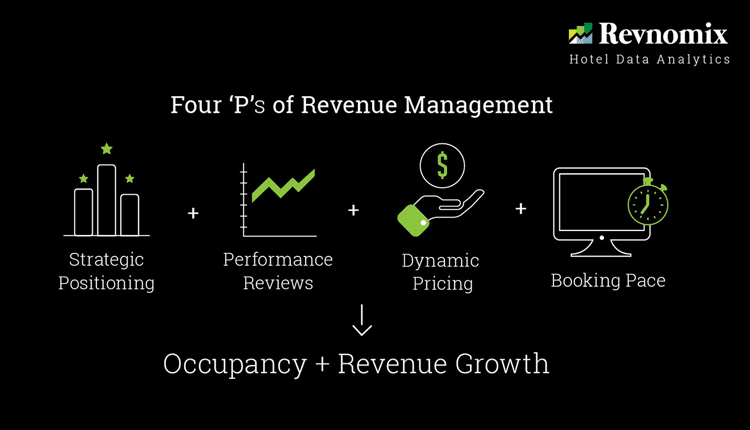
In today’s fast-moving hospitality landscape, 4 Ps of Revenue Management has become a practical framework hotels are using to protect margins and unlock smarter growth as 2026 approaches.
Hotel owners and revenue leaders are no longer asking if revenue management matters—they are asking how to make it work consistently. Market volatility, AI-driven pricing tools, and shifting guest behavior mean that relying on intuition alone is risky. A structured approach grounded in the four Ps—Product, Price, Place, and Promotion—brings clarity and control.
Understanding the 4 Ps of Revenue Management in Modern Hospitality
The 4 Ps of Revenue Management translate classic marketing principles into actionable Hotel revenue management strategies. When aligned with real-time data and automation, they help hotels balance occupancy, rate integrity, and long-term profitability.
Key benefits of applying the 4 Ps include:
1. Better alignment between demand and room inventory
2. Stronger pricing decisions based on market signals
3. Improved channel performance and visibility
4. Sustainable revenue growth instead of short-term wins
This framework supports Revenue Management Best Practices 2026 by combining analytics with guest-centric thinking—critical for hotels competing in crowded markets.
Product Decisions Within the 4 Ps of Revenue Management
In the 4 Ps of Revenue Management, “Product” goes beyond room types. It includes guest experience, amenities, packages, and value perception. In 2026, travelers choose hotels based on relevance, not just price.
Hotels can refine product strategy by:
1. Segmenting rooms by view, flexibility, and added perks
2. Creating bundled offers with breakfast, spa, or local experiences
3. Differentiating refundable vs. non-refundable inventory
Strong product definition improves Demand forecasting in hospitality because each product targets a specific traveler need. When your offerings are clearly structured, revenue systems can match demand patterns more accurately.
FAQ: Why is product segmentation important in revenue management?
Clear segmentation allows better pricing and demand matching, helping hotels sell the right room to the right guest at the right time.
Price Strategy and the 4 Ps of Revenue Management
Pricing is the most visible pillar of the 4 Ps of Revenue Management, and also the most dynamic. Static rates no longer work in a world of fluctuating demand, events, and competitor shifts.
Effective Pricing optimization for hotels relies on:
1. Real-time market and competitor data
2. Dynamic pricing rules by segment and season
3. Rate fences that protect premium inventory
Smart pricing does not mean constant discounting. Instead, it focuses on value-based pricing that reflects demand intensity. Hotels using advanced Revenue Management Services often see stronger ADR growth without sacrificing occupancy.
FAQ: How often should hotels update prices?
Rates should be reviewed daily or automated in real time to reflect demand changes, events, and booking pace.
Place (Distribution) in the 4 Ps of Revenue Management
“Place” within the 4 Ps of Revenue Management refers to distribution channels—OTAs, direct bookings, GDS, and corporate contracts. In 2026, distribution efficiency is a profit lever, not just a visibility tool.
Best practices include:
1. Prioritizing direct bookings with value-add incentives
2. Adjusting availability by channel based on cost of sale
3. Monitoring channel performance and conversion rates
Balanced distribution supports Hotel revenue management strategies by reducing dependency on high-commission channels. A strong channel mix also improves forecasting accuracy and pricing confidence.
FAQ: Is direct booking always better than OTAs?
Direct bookings usually have lower costs, but OTAs still play a key role in visibility and demand generation when managed strategically.
Promotion Tactics That Support the 4 Ps of Revenue Management
Promotion completes the 4 Ps of Revenue Management by influencing demand timing and booking behavior. Promotions should be targeted, data-backed, and time-sensitive.
1. High-impact promotional tactics include:
2. Limited-time offers during need periods
3. Personalized campaigns for repeat guests
4. Event-driven promotions tied to local demand
Promotions work best when aligned with Demand forecasting in hospitality. Instead of blanket discounts, hotels can stimulate demand only where gaps exist—protecting rate integrity while improving occupancy.
FAQ: Do promotions hurt long-term pricing power?
Not when used selectively. Targeted promotions fill low-demand periods without conditioning guests to expect discounts.
Boost Your Hotel Revenue Today
Technology and Data Powering Revenue Management in 2026
Technology binds all four Ps together. Advanced analytics, AI-driven forecasts, and automation enable hotels to act faster and smarter.
Modern Revenue Management Services typically support:
1. Predictive demand modeling
2. Automated rate and inventory updates
3. Scenario planning for market disruptions
By adopting Revenue Management Best Practices 2026, hotels shift from reactive decisions to proactive strategies that scale across portfolios.
FAQ: Can smaller hotels use advanced revenue management tools?
Yes. Cloud-based systems and managed services make enterprise-level tools accessible to independent properties.
Turning Strategy Into Action
Execution matters. Hotels that win in 2026 align teams, systems, and strategy around the 4 Ps. Clear KPIs, regular performance reviews, and expert support accelerate results.
Action steps to get started:
1. Audit current pricing, product mix, and channels
2. Identify demand gaps and high-cost distribution
3. Partner with experienced revenue specialists
For tailored guidance, explore professional support through https://revnomix.com/services/revenue-management-service/. When strategy meets execution, profitability follows.
At the right moment, encourage guests to Book Now, or invite partners to contact us to explore collaborative growth opportunities. For daily updates, visit our Facebook and Instagram profiles.
FAQ: How long does it take to see revenue improvements?
Most hotels see measurable gains within 60–90 days once pricing, distribution, and forecasting are aligned.
Conclusion: Why the 4 Ps Matter More Than Ever
The 4 Ps of Revenue Management offer hotels a clear, adaptable roadmap for navigating uncertainty and capturing demand in 2026. By refining product, optimizing price, balancing place, and targeting promotion, hotels can achieve sustainable profitability—not just short-term spikes.
Hotels embracing data-driven Hotel revenue management strategies today are the ones leading tomorrow’s market. To learn more about practical applications and expert insights, visit https://revnomix.com/ and take the next step toward smarter revenue growth.