Hotels today operate in an environment where room prices change quickly, guest demand shifts constantly, and bookings arrive from multiple channels simultaneously. To remain competitive, properties need connected technology that allows pricing, availability, and distribution to work together seamlessly. This is where a hotel channel manager and intelligent pricing systems become essential for operational efficiency and revenue growth.
Managing room inventory manually across online travel agencies, direct websites, and booking platforms creates inefficiencies and pricing inconsistencies. Hotels increasingly rely on integrated technology to automate these processes and improve profitability while reducing manual workload.
Revenue Management Systems: Why Modern Hotels Depend on Smart Pricing
A successful pricing strategy starts with data. Revenue Management Systems help hotels analyze occupancy patterns, market demand, competitor pricing trends, booking windows, and seasonal changes to generate optimized rates.
A strong revenue management approach enables hotels to:
1. Improve occupancy without excessive discounting
2. Increase average daily rate (ADR) performance
3. Forecast demand more accurately
4. Reduce pricing errors across channels
5. Make faster business decisions using data
Hotels using a revenue management system for hotels can adapt pricing strategies dynamically instead of relying on static pricing models that may reduce profitability.
Pricing intelligence alone, however, is only part of the process. Distribution also plays a major role.
Revenue Management Systems and Distribution: Building a Connected Ecosystem
Pricing optimization becomes more effective when connected directly with booking channels. This is where integration between pricing technology and distribution technology creates operational advantages.
A hotel may receive bookings from:
1. Direct websites
2. OTAs
3. Travel partners
4. Corporate booking channels
5. Mobile booking applications
Without automation, updating pricing manually across every source creates delays and inconsistencies.
Integrated technology allows hotels to synchronize rates, inventory, and restrictions instantly, improving both operational speed and guest experience.
What Is a Hotel Channel Manager and Why Is It Important?
A hotel channel manager is a technology that distributes room inventory and rates across multiple booking platforms automatically.
Instead of manually updating availability on multiple channels, hotels can manage everything centrally.
Key capabilities include:
1. Real-time inventory updates
2. Automatic rate distribution
3. Booking synchronization
4. Reduced overbooking risks
5. Faster availability management
Hotels managing multiple distribution sources depend heavily on strong hotel distribution management processes to maintain pricing consistency and availability accuracy.
Without centralized distribution, pricing strategies become difficult to execute effectively.
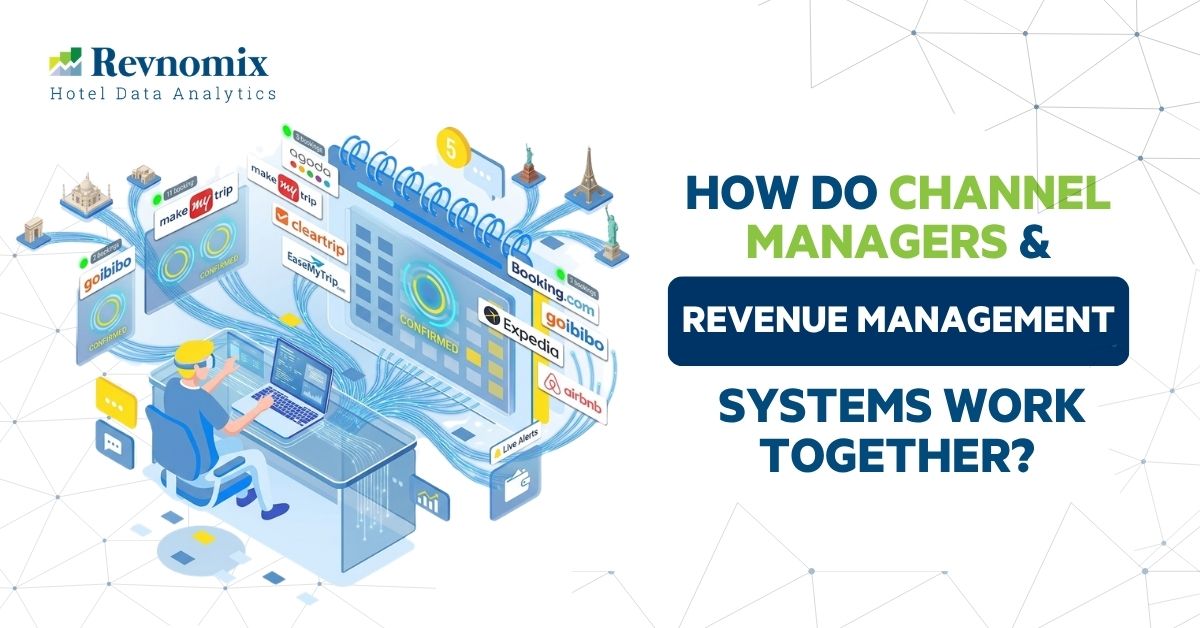
How Do Channel Managers and Revenue Management Systems Work Together?
The relationship between pricing technology and distribution technology is highly interconnected.
Pricing systems generate optimized rates based on demand signals. Distribution systems then publish those rates across all channels.
The workflow usually follows this process:
Step 1: Demand data is analyzed
Step 2: Pricing recommendations are generated
Step 3: Updated rates are pushed automatically
Step 4: Inventory synchronizes across channels
Step 5: Booking data flows back for future optimization
Benefits of this integration include:
1. Faster pricing adjustments
2. duced manual intervention
3. ponsiveness
4. tter occupancy management
5. re consistent pricing across channels
When pricing and distribution operate together, hotels can react faster during peak periods, holidays, or sudden demand shifts.
What Is the Difference Between a Channel Manager and a Revenue Management System?
Although both technologies work together, they solve different operational problems.
A pricing engine decides what price should be sold, while distribution technology decides where those prices appear.
This distinction is important because hotels often require both systems to maximize performance.
Why Do Hotels Need Channel Managers and Revenue Management Systems?
Hotels face multiple challenges:
1. Fluctuating demand
2. Multiple sales channels
3. Manual workload
4. Pricing inconsistencies
5. Competitive pressure
Connected systems help solve these issues through automation and centralized decision-making.
Hotels implementing integrated solutions often experience improvements in:
1. Revenue growth
2. Operational efficiency
3. Booking conversion rates
4. Occupancy optimization
5. Reduced administrative tasks
As digital distribution expands, disconnected technology stacks create more friction and inefficiencies.
How Does Channel Manager Integration Improve Hotel Revenue?
Integrated technology creates measurable revenue opportunities because pricing changes reach the market faster.
Revenue improvements typically happen through:
Faster Pricing Updates
Rates can change instantly when market conditions shift.
Reduced Overbooking Risk
Inventory synchronization improves availability accuracy.
Improved Channel Performance
Hotels can allocate inventory more strategically.
Better Forecast Accuracy
Data flowing between systems improves future predictions.
Stronger Yield Management
Hotels maximize pricing opportunities during demand spikes.
These benefits become increasingly important for hotels operating in competitive destinations or highly seasonal markets.
The Role of Automation in Modern Hotel Distribution Management
Manual operations slow down revenue growth.
Automation enables:
1. Automatic inventory updates
2. Centralized booking management
3. Real-time pricing adjustments
4. Faster reporting processes
5. Reduced human error
Many hotels now treat automation as a requirement rather than an optional technology investment.
Using advanced hotel revenue management software together with connected distribution tools creates stronger operational alignment.
How Hotels Can Build an Effective Technology Strategy
Technology investments work best when systems communicate effectively.
Hotels should prioritize:
1. Open integrations
2. Real-time data flow
3. Scalability
4. Reporting capabilities
5. Automation features
Questions to ask before implementation:
1. Can systems exchange data automatically?
2. Are pricing updates instant?
3. Does the platform support multiple channels?
4. Can reporting combine multiple data sources?
5. Will automation reduce manual work?
A connected ecosystem produces stronger outcomes than isolated solutions.
Future Trends Shaping Hotel Pricing and Distribution
Several trends continue to change hotel operations:
1. AI-driven forecasting
2. Dynamic pricing automation
3. Predictive demand modeling
4. Real-time market intelligence
5. Increased personalization
These technologies are helping hotels make faster decisions while reducing reliance on manual workflows.
Businesses adopting integrated pricing and distribution approaches are often better positioned to adapt to changing traveler behavior.
Choosing the Right Partner for Integrated Revenue Growth
Hotels evaluating technology should focus on integration capabilities rather than isolated features.
Revnomix helps hotels improve pricing strategies through connected systems and intelligent automation that support operational efficiency.
If your hotel is looking to strengthen pricing, distribution, and automation strategies, contact us or Book Now to explore scalable solutions that support long-term growth.
For regular updates, visit our Facebook and Instagram profiles.
Revnomix continues supporting hotels seeking better visibility into pricing performance and distribution efficiency.
Frequently Asked Questions
1. What is a channel manager in the hotel industry?
A: A channel manager is software that distributes hotel inventory and rates across multiple booking channels automatically. It reduces manual work, synchronizes availability in real time, and helps prevent overbookings.
2. How does a revenue management system help hotels increase revenue?
A: It analyzes demand, booking patterns, and market trends to optimize room pricing. This allows hotels to improve occupancy, maximize ADR, and make faster pricing decisions.
3. Can a channel manager integrate with a revenue management system?
A: Yes. Integration allows pricing recommendations to flow directly into distribution channels automatically, reducing delays and maintaining pricing consistency.
4. What are the benefits of connecting channel managers with hotel RMS software?
A: Integration improves pricing accuracy, inventory synchronization, operational efficiency, booking management, and revenue optimization across multiple channels.
5. How do hotels manage pricing across multiple booking channels?
A: Hotels typically use centralized technology to automate pricing distribution and inventory updates across OTAs, websites, and booking partners simultaneously.
Summary
Article Name
How Channel Managers and Revenue Management Systems Work
DescriptionLearn how Channel Managers and Revenue Management Systems work together to optimize pricing, inventory, and bookings, helping hotels maximize revenue.
Publisher Name
Revnomix solutions LLP
Publisher Logo